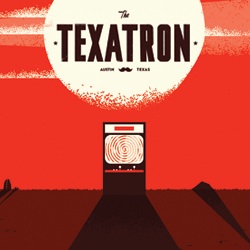
What kind of wonderful is about to happy with Polytron’s Fez? Speculation is running rampant that the key is in that ‘A’: specifically, that the image is tipping us off to an imminent announcement from Microsoft that the game is headed to the Xbox Live Arcade.
To test that theory, I pulled out my early IGF 2008 build of the game (as I do every few weeks when I need a re-up on sunshine) and found that– ah, wait, the ‘A’s been there from the start (that Fez is being created in Microsoft’s XNA and prefers an Xbox 360/Windows pad for optimal play has never been a secret).
That’s not to say that it’s not the trick up Polytron’s sleeve, anyway, but I suppose we’d just be as well off trying to strip hints off the hieroglyphics hiding in the preview shot from earlier this month. Wait, should we?
With just a touch smoother scrolling (chalked up, surely, to the program itself), this could feel amazing: Germany’s Research Center for Artificial Intelligence has hacked together a Wii balance board with Google Earth to go surfing, as kottke says, “like the Silver Surfer.”
Or, if you please, the same interaction can be used in Second Life, or — as made the rounds earlier last year — World of Warcraft‘s Azeroth, but there’s nothing better than their tour-glide over Munich from 300 feet.
Gamasutra is running a nice piece from former IGF grand prize finalist Andy Schatz looking at how the “indie” landscape has evolved, tracing its route initially from the doors opened by casual hits like Diner Dash and Zuma to teams creating portal alternatives for games that didn’t fit that casual mold.
But Schatz says, rightly, that the past two years have seen indie gaming hit critical mass, and that the category is now less about economics and more about the experience:
Gamers and customers now see indie games as the poetry, the short stories of the gaming world. They are different, they are thoughtful, and they make you appreciate nuance.
As 2D Boy’s (World of Goo) Kyle Gabler said in his recent Global Game Jam keynote, the best games made in game jams “introduce one new concept to gaming as fast and as clear as possible.” This is largely true for all of indie games as well. The finalists in this year’s IGF competition also tend towards this concept.
Why is this important? Because in the past, indie games didn’t mean anything to customers. We, the developers, knew what it meant — it was important to us because it meant that we were unfettered. But customers didn’t have expectations about what an indie game was.
Customers do have expectations now. Indie games are games that, by definition, don’t fit into any other box. They cost from $0 to $30. They are “cool” — knowing about them is “cool.”
Hit the link for the full evolution and where Schatz sees indie gaming going in years to come.
We here at Offworld are big fans of LA radio collective Dublab and its unbelievably stellar line-up of associates. Most recently, its VisionVersion project — in which its “collective of directors film amazing artists performing live in exciting locations around Los Angeles” — has spawned a fantastic set of videos featuring Offworld top-fave bands like Why? [watch here] and Daedelus [watch here in awe of his Tenori-On like magic Monome box].
So we’re quite excited to partner with Dublab to debut the latest in its VisionVersion line, Wham City artist Benny ‘Adventure‘ Boeldt doing a live version of his low-bit-inspired hit “Poison Diamonds.”
It’s not just the sound that’s near and dear to our hearts, though: the video was filmed at Glendale, CA retro-gamer paradise Vintage Arcade Superstore and is coated in appropriately fuzzy Betamax corruption. That the track opens and closes with a Roy Batty sample from Offworld’s namesake is just icing.
The bigger story here: trusted sources tell Starmen.net — clearinghouse for all things pertaining to SNES cult hit series Earthbound — that the game’s spring 2008 ESRB rating was not a sign it would be hitting the Wii’s Virtual Console, but was, literally, “a mistake,” and that the game is seemingly inextricably bound in a legal battle because of copious pop culture references and samples Nintendo of Japan is stubbornly refusing to allow Nintendo of America to fix.
(The question unanswered: what about the “time and circumstances” make now the moment for Starmen to let this out of the bag?)
But of more pertinent interest: which references and samples, exactly? To that end, Starmen spinoff blog Earthbound Central has put together a list of some of the most unexpected samples hidden deep within Earthbound‘s soundtrack.
A sampling: background clicks and synth pads from Ric Ocasek’s ‘Keep on Laughin’ show up in the Moonside area theme, ‘Jackie’s Cafe’ contains warped bits of both the Little Rascals/Our Gang theme, and, of all things, a bent version of the Star-Spangled Banner.
Though EC doesn’t overtly say that this is specifically what’s causing hand-wringing with Nintendo’s lawyers, presumably this is enough of a start.
New York’s Institute of Play has officially announced the foundation of Quest to Learn, a new school for “digital kids” that will be accepting its first 6th grade class this fall, which “uses the underlying design principles of games to create highly immersive, game-like learning experiences for students.”
Games work as rule-based learning systems, creating worlds in which players actively participate, use strategic thinking to make choices, solve complex problems, seek content knowledge, receive constant feedback, and consider the point of view of others.
As is the case with many of the games played by young people today, Quest is designed to enable students to “take on” the identities and behaviors of explorers, mathematicians, historians, writers, and evolutionary biologists as they work through a dynamic, challenge-based curriculum with content-rich questing to learn at its core.
It’s important to note that Quest is not a school whose curriculum is made up of the play of commercial videogames, but rather a school that uses the underlying design principles of games to create highly immersive, game-like learning experiences.
Games and other forms of digital media serve another useful purpose at Quest: they serve to model the complexity and promise of “systems.” Understanding and accounting for this complexity is a fundamental literacy of the 21st century.
Institute of Play executive director Katie Salen is one of the school’s designers: you may know her as co-author — along with Gamelab‘s Eric Zimmerman — of Rules of Play, one of the best texts encapsulating the fundamental language of game design.
The school is currently looking for both teachers and students, and, it says, will be expanding “by a grade level annually through 2015.”
I’m every bit as much a design nerd as I am a game one, and clearly I’m not alone: architect/designer Jason Franzen and musician/programmer Adrian ‘Rust Cycle‘ Johnson have created Kern, the first game that manages to build fun out of the bane of every typographer’s existence.
The game’s hook is quite simple: upper-case Helvetica words fall slowly from the top of the screen, and you drag a missing letter from each to its properly kerned spot. The closer you are and the faster you manually drop the word, the better you do. Miss your goal by an inch and you lose a life… errr, ligature, which you can gain back by being right on the spot.
The game’s beautifully designed (all on a grid, natch) but quite simple in its current form: FORMation promise more music and online leaderboards in a later update. The group’s also behind Eye vs. Eye, a two player game where you mix RGB values to sight-match colors, and will be releasing Hexxis in the near future, which I can’t help but think will be something on the order of bit Generations’ Dialhex/Art Style’s Rotohex.
I’m getting so many vibes from this latest ‘story’ trailer it’s hard to tell them apart, but they’re all meshing in a very pleasing way: I see Worms, Defender, Patapon and a healthy dose of vaguely Castle Crashers style, and that’s just a cursory look.
Due for a downloadable WiiWare release in coming months from upstart Ronimo Games, Swords and Soldiers will be the Wii’s first big real-time strategy game, and its hook is that you do it all on a 2D sidescrolling plane.
For the skeptical, it should also be noted that Ronimo might be unproven in the commercial game space, but the team is the same behind de Blob, or rather, the original student team that created the 2006 prototype for the City of Utrecht (and they’ve even kindly linked my original writeup for Edge magazine), before THQ picked up on its brilliance and would turn it into one of the publisher’s leading original IP franchises, with a current Wii and iPhone release and sights set on an eventual DS version.