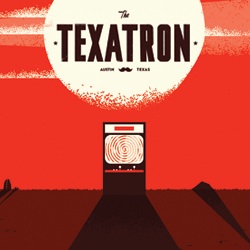
Unreality’s list of 20 vintage videogame ads is a decently selected list of classic franchises and fun comic art (see Atari’s Mario Bros. ad), but most striking is this ad for Wizard’s Texas Chainsaw Massacre, a 180 turn from most modern marketing (bar, perhaps, Postal or Manhunt), brazenly using its violence as both a selling point and a healthy anger-management pursuit.
Even better, the above video of its actual gameplay.
Ars Technica’s latest interview with Harmonix head Alex Rigopulos has scored an effortless Unison Bonus with my heart, and it’s got little to do with the state of the music industry’s involvement with Rock Band going forward.
Instead, (and finally!) Ben Kuchera presses Rigopulos on the idea of working with Sony to get the studio’s earlier work, particularly the Sony-owned Amplitude, done right via the PlayStation Network:
Rigopulos: I would love to. That game is still close to my heart. I love it. I’d love to do a sequel to Amplitude, actually. It’s an issue of prioritization… For us, that lingering question of “what are we going to do about Amplitude” is still very much out there. I would love to come back and do it right for the PlayStation 3, for example.
And, even better, gets him to elaborate on the studio’s obvious next best move: the iPhone, a place I’d love to see HMX show the Tap Tap ilk just how it’s done, either with a reworked port of its outrageously under-appreciated iPod game Phase [buy it now if you haven’t already], or something more original:
Rigopulos: Believe me, we’re looking at the iPhone. If we take a stop on that platform, we want to do it right, so we’re thinking about the specific attributes of the iPhone so we can make it the right step where we can make the product that’s the right product for that platform. We could just do a port of Phase, but I’m wondering if there isn’t something that’s more ambitious that we could do as well. I don’t think we have any specific plans there yet, but needless to say, we’re looking at it.
From retro to retro: Gamasutra has launched a terribly promising new series reprinting archive material from the depths of its Game Developer Magazine reserves, starting with this 1994 premier issue behind-the-scenes look at the making of Doom.
The article’s a treasure trove of quaint technical anecdotes from Carmack trundling through snow to get his hands on a much treasured NeXT cube, to Id’s babysteps into online multiplayer, to its very opening salvo: “In an era of where it often takes 20MB to put in all the advertised features, they did it in less than four.”
We’ve only got half an idea of what’s actually cooking at Scotland’s Denki — the studio’s site will only cop to their forthcoming Xbox Live game Quarrel and an undetailed Wii game, then “turning [their] attention to the iPhone” (!).
In the meantime, though, they’ve launched a series of playful campaigns starting with the Denki Top 100, a “year-end round-up of the greatest, gaming experiences we’ve ever done,” and now, possibly the best recruitment ad in recent memory, Are You Denki Or Not?
I’m pleased to say I completely aced the test (though I’ve known we were eye-to-eye since Go! Go! Beckham) and half think it could function just as easily as an Are You Offworld Or Not — let us know how you fare.
This is what we like to see: something to rival Dan Bruno’s Mother 3 musical malarkey and Kevin R. Grazier, Ph.D.’s fantastic 2007 Halo Science 101 (key finding: “For a Halo with a radius of 5,000 kilometers to simulate one Earth gravity, it would have to spin with a tangential speed of slightly over seven kilometers per second. That implies that the Halo would rotate once every hour and fifteen minutes, or 19 ¼ times a day.”) for sheer theoretical madness.
Brooklyn physics teacher Glenn Elert and students have meticulously measured Mario’s rate of descent in each game of the franchise from Super Mario Bros. to Super Paper Mario (the study having been done, presumably, before Super Mario Galaxy — or perhaps its distinct gravitational lunacy instantly set their computational units smoking).
Their conclusion:
Generally speaking, the gravity in each Mario game, as game hardware has increased, is getting closer to the true value of gravity on earth of 9.8 m/s2. However, gravity, even on the newest consoles, is still extreme. According to Wikipedia, a typical person can withstand 5 g before losing consciousness, and all but the very latest of Mario games have gravity greater than this. Also, with gravity that great, it is a wonder Mario can perform such feats as leaping almost 5 times his own body height!
Via Darren Gladstone’s latest PC World column, a good way to wile away the weekend with Virtual Apple ][, a browser-embedded Apple II and IIgs emulator last mentioned on the Mother Boing in 2004, but now cross-browser/platform compatible in its 4.0 iteration (though IIgs emulation still requires Windows).
As Gladstone points out, the 1250+ images in stock means you can take a trip through some of gaming’s earliest landmarks that took us where we are today, from Fallout progenitor Wasteland to Beyond Castle Wolfenstein to Ultima and Wizardry to–… ah, who are we kidding, let’s just label this one the Official Play-Oregon Trail-In-Your-Browser Site.
Even months later, my Wasteland time has left me utterly earwormed with nearly all the songs on Fallout 3‘s stellar soundtrack (as would be expected, I suppose, after being marooned nearly 70 hours with the same song shortlist), and short of GameStop’s pre-order 5-song sampler, or, you know, a modicum of effort at chasing them all down on iTunes, there was no way to collect everything in one fell swoop.
Enter: Bethesda, who have updated their blog with word that iTunes’s ‘iMix’ section has an essentially definitive Fallout 3 mix that nets you 13 songs for just under as many dollars. The blog’s got full instructions on chasing it down, but you can also get there directly via this phobos link.
Since late November, I’ve been doing at very least twice or thrice weekly App Store checks to see if Yoot Saito’s previously mentionedSeaman spin-off caveman sim Gabo has sprung to life, and apparently my checks were all in vain.
In a post-script to a long and otherwise unrelated blog post, Saito has said (as best I can tell, I’m currently working on a more official translation) that the app has long been finished, but that Apple had “expressed displeasure” at the interactions with its perkily umbilical Peking man and denied its release.
Though this part’s even more shakily translated, the post also seems to suggest that because the iPhone app’s developers are currently preoccupied with Seaman DS (which might itself be the even bigger news; it’s the first Saito has hinted at the idea since the beginning of 2008), they’ve given up on making changes to satisfy Apple’s demands for now, but in the long run hope to return to the project and ensure its release.
In its fifth year running (and, shamefully, the first I’d heard of them), Muppet-makers The Jim Henson Company have put Will Wright’s Spore and Nintendo legend Shigeru Miyamoto in good company amongst prior honorees Al Gore, Hayao Miyazaki, Neil Gaiman, Etsy and the Prius as recipients of their annual Jim Henson Honors, which celebrate “organizations, individuals or products that reflect the core values and philosophy of Jim Henson and the company he founded.”
Miyamoto was awarded the ‘Celebration’ honor for “[making] the world a better place by inspiring people to celebrate life,” most recently with his oversight on Wii Fit, while Spore was honored for “[demonstrating] ground-breaking technology in a creative way,” in giving people “their own personal universe in a box where players build their own galaxy from scratch.”
Also awarded this year was Atlanta, GA non-profit The Center for Puppetry Arts and guerilla design legend Shepard Fairey for his instantly recognizable Hope art campaign for Barack Obama.
Keeping briefly on a design kick, Ray Barnholt at 1UP’s new retro blog has dug up this brilliant collection of Famicom inspired pixel fonts, where sussing out the source for each based on their punusual names (Dig Dub, Monkey Kong, Tower of Druger, Sp-Ranker) is quite nearly a game in itself (at right, Coconut Milk, inspired by 8-bit Hudson obscurity Nuts & Milk).
Perfect, I should think, for any upcoming Offworld skin re-designs, or, Barnholt suggests, “bedroom door signs (‘ENTERING AWESOME GAMER ZONE’)” and tattoos.